Responsible travel in Norway

Norway is one of Europe’s most sustainably managed destinations. Our electricity is generated almost entirely from renewables; we have more electric cars on the roads than anywhere else, and a growing number of regions have sustainability certification.
Learn everything you need to know about sustainable tourism in Norway, and how your choices make a difference.
Where would you like to start?

Why Norway is one of the world's most sustainable countries
Norway generates over 90% of its electricity from renewables, leads Europe in EV adoption, and has transformed its cities. Here’s the full story.

How to travel responsibly in Norway
Most international visitors fly to Norway, and that flight carries a real carbon cost; there's no way around it. This guide is about everything you can control once you land. And in Norway, that turns out to be a lot! And it's one of the few countries where the lower-impact choice is usually a better experience too.

Responsible activities in Norway: What to do and what to look for
Anyone visiting Norway wants to experience it the right way and use activities that are unique to the country. Below are some of the classic experiences, along with our tips on how to do them in a way that respects the landscape and the people who live here.

Norway’s certified sustainable destinations: Where to go and why it matters
Norway was one of the first countries in the world to build a national standard for sustainable tourism, launched back in 2013.
Today, nearly 50 destinations across the country hold the Sustainable Destination label, from Arctic Tromsø to the small fjord villages of the west. The idea behind it is simple: a good place to live is a good place to visit.

Norwegian ecotourism certifications explained: What they mean and what they don’t
Norway takes certifications seriously. Certifications are real tools here, not empty marketing claims. They set a clear standard, check it regularly, and hold businesses to their word.
Not all certifications are the same, because some cover an entire destination, while others cover only a single business or specific experience you take part in. Once you can tell them apart, you can make a real choice, rather than just recognizing the logo. Here are the labels you'll come across in Norway and what each one means.

Fjord Tours commitment to sustainability
Fjord Tours is committed to responsible travel in Norway. From the routes we design to the partners we work with, sustainability is built into how we shape our products. Here's what that looks like in practice.
Why Norway is one of the world's most sustainable countries
Norway generates over 90% of its electricity from renewables, leads Europe in EV adoption, and has transformed its cities. Here’s the full story.
How to travel responsibly in Norway
Most international visitors fly to Norway, and that flight carries a real carbon cost; there's no way around it. This guide is about everything you can control once you land. And in Norway, that turns out to be a lot! And it's one of the few countries where the lower-impact choice is usually a better experience too.
Responsible activities in Norway: What to do and what to look for
Anyone visiting Norway wants to experience it the right way and use activities that are unique to the country. Below are some of the classic experiences, along with our tips on how to do them in a way that respects the landscape and the people who live here.
Norway’s certified sustainable destinations: Where to go and why it matters
Norway was one of the first countries in the world to build a national standard for sustainable tourism, launched back in 2013.
Today, nearly 50 destinations across the country hold the Sustainable Destination label, from Arctic Tromsø to the small fjord villages of the west. The idea behind it is simple: a good place to live is a good place to visit.
Norwegian ecotourism certifications explained: What they mean and what they don’t
Norway takes certifications seriously. Certifications are real tools here, not empty marketing claims. They set a clear standard, check it regularly, and hold businesses to their word.
Not all certifications are the same, because some cover an entire destination, while others cover only a single business or specific experience you take part in. Once you can tell them apart, you can make a real choice, rather than just recognizing the logo. Here are the labels you'll come across in Norway and what each one means.
Fjord Tours commitment to sustainability
Fjord Tours is committed to responsible travel in Norway. From the routes we design to the partners we work with, sustainability is built into how we shape our products. Here's what that looks like in practice.
At a glance
What is responsible travel?
Responsible travel means enjoying a place without using it up: keeping your impact low and leaving the benefit with the people who live there.
Why Norway leads in responsible tourism
Norway’s power grid works mainly on renewable sources, and the shift to electric vehicles is the most advanced of any country. That same systematic approach flows into how the country manages tourism. From a national scheme that certifies whole destinations to Norway’s sentiment on nature and communities.
Getting around Norway with a lower impact
The train from Oslo to Bergen is often called one of the most beautiful rail journeys in the world, and it produces a fraction of the emissions of the same trip by car. That's a pattern all over Norway: the more sustainable option is usually also the more memorable one.
What responsible travel looks like in practice
In practice, responsible travel in Norway means choosing experiences that respect the landscape and the communities within it: hiking on managed trails, fjord tours on electric boats, wildlife encounters that maintain respectful distance, and accommodation with recognized environmental certification.
How Norway certifies its destinations
Norway runs a national Sustainable Destination scheme, managed by Innovation Norway, that certifies destinations as a whole rather than individual businesses. To qualify, a place has to show measurable progress in protecting nature and culture, supporting the local economy, and managing visitor pressure. Certified destinations include Bergen, the Arctic city of Tromsø, and the Lysefjord.
Understanding Norway’s environmental certifications
You’ll come across several certification labels in Norway, and they don’t all mean the same thing. Sustainable Destination applies to whole regions; Eco-Lighthouse certifies individual businesses; Norwegian Ecotourism assesses the experiences themselves. Knowing the difference is what turns a label into a useful signal.
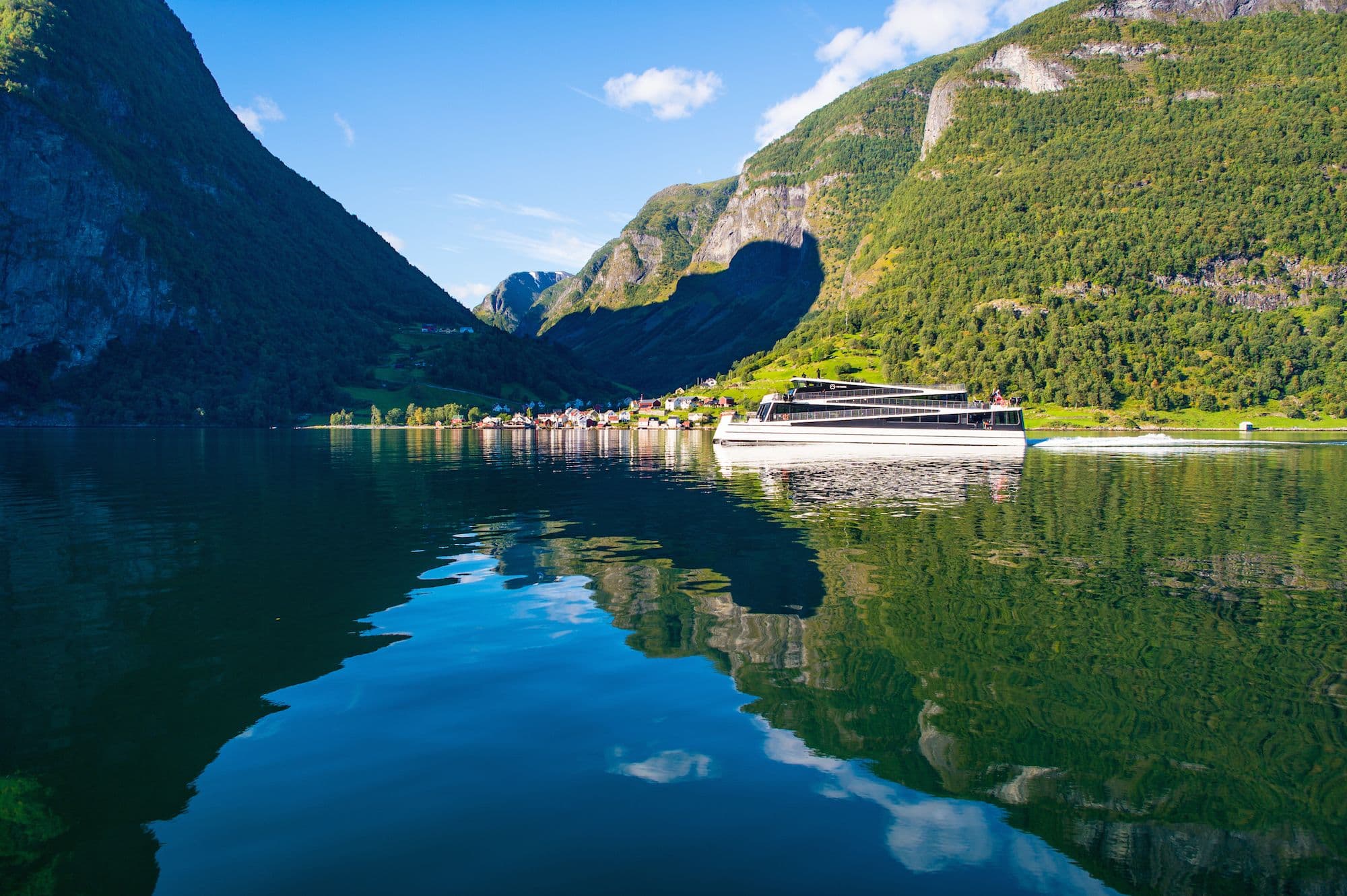
Fjord Tours’ approach
We at Fjord Tours build journeys around lower-impact transport, such as trains, electric ferries and buses, rather than rental cars and domestic flights. We have held the Eco-Lighthouse certification since 2010.