When to visit the fjords
What you can see and do in the Norwegian fjords changes with the seasons. Waterfalls are often at their most powerful in spring and early summer, when melting mountain snow increases the flow of water. Hiking trails high in the mountains may still be covered in snow and may not be accessible until June or later. Some viewpoints are reached by mountain roads that open only in summer. In winter, snow often covers the mountains around the fjords.
The right time for you depends on what you’d like to experience. Our Bergen-based team has helped travelers explore the fjords since 1982, and in this guide, we’ll help you choose a month based on what you want to see and do.
Written by
The Fjord Tours team
11 min readPublished: Nov 5, 2026

Scroll to:
The best time to visit the Norwegian fjords at a glance
Each season offers a different experience in the fjords.
Spring and early summer have powerful waterfalls from melting mountain snow, while you’ll have long days and the widest range of activities in July and August. Autumn brings changing colors and quieter fjord villages, while the fjords in winter will have snow-covered mountains and fewer visitors.
Conditions can be very different besides the fjord and high in the mountains. A village by the water may be green and snow-free while hiking trails and mountain roads above it are still covered in snow. A fjord cruise is a good way to explore even when some mountain roads are closed
For a broader overview of Norway’s weather and seasons beyond the fjords, read our guide to when to visit Norway.

The Norwegian fjords month by month
Here’s what each month is best for, which fjords we recommend, and what to keep in mind when planning your trip.
Many of the fjords in this guide, including the Geirangerfjord, Sognefjord, and Hardangerfjord, are in western Norway. For a trip focused on the northern lights, we recommend northern Norway, including the Lofoten Islands and the area around the city of Tromsø.

January: Snowy mountains and winter fjord cruises
In January, the fjords are quiet. Short days and long nights make it one of the most peaceful times to visit. Snow often covers the surrounding mountains, and some waterfalls partly freeze during colder periods.
Some outdoor activities and sightseeing routes do not run in winter. We recommend the Nærøyfjord, in western Norway’s Sognefjord region, for a winter visit because you can travel there and take a fjord cruise throughout the year. From the water, you can see the steep mountainsides and winter scenery.
If seeing the northern lights is a priority, we recommend a trip to Northern Norway. January has long, dark nights, but you will also need clear skies, and sightings are not guaranteed.
Best for: Snowy fjord scenery, quiet travel, and northern lights in Northern Norway.
Keep in mind: Plan your main sightseeing for the daylight hours and check cruise departure times before deciding what to fit into one day.
February: Winter activities and longer days
February is still winter in the fjords. Snow usually covers the high mountains, but daylight gradually increases compared to January, so you have a bit more time to explore the fjords when it’s light outside.
February can be a good month to combine fjord views with skiing or other winter activities around Nordfjord and Hardangerfjord, both in western Norway.
In northern Norway, the nights are still long enough to look for the northern lights. You can include a visit to the Trollfjord, between the Lofoten and Vesterålen islands, as part of a wider winter trip with snow activities and northern lights excursions
Best for: Winter fjord scenery, snow activities, and northern lights in the north.
Keep in mind: Plan your main sightseeing for the daylight hours and check cruise departure times before deciding what to fit into one day.
March: Winter scenery and the first signs of spring
The first signs of spring may appear in villages and valleys while the mountains remain snowy. March can suit you if you want to combine a fjord cruise with winter activities such as snowshoeing. The longer days give you more daylight for sightseeing.
March is also within the northern lights season in Northern Norway, but it generally ends towards the end of the month.
Best for: Longer winter days, snowy mountains, and combining fjord scenery with winter activities.
Keep in mind: Hiking trails high in the mountains may still be covered in snow. Check conditions for the walk you want to do before you go out.

April: Spring arrives in the fjord villages
April is a month of seasonal transition in the fjords. Villages and lower valleys start turning greener, while snow may still lie high in the mountains, just like in March.
Some summer fjord cruises and activities start again, but others don’t start until May or later. Winter conditions can still affect high mountain roads and viewpoints, so while spring is around the corner, not everything will be open just yet.
We recommend the Sognefjord region in western Norway, including the Nærøyfjord, in April if you prefer quieter surroundings and want to focus on fjord views and village visits.
Best for: Quiet spring travel, changing landscapes, and visiting before the main sightseeing season.
Keep in mind: Cruise seasons start at different times, and mountain roads may still be closed.
May: Waterfalls and fruit blossom
May is one of the best months to visit the Norwegian fjords for waterfalls and spring scenery. Valleys turn green, trees blossom in shades of pink and white, and fruit trees begin to bloom around parts of Hardangerfjord and Sognefjord in western Norway.
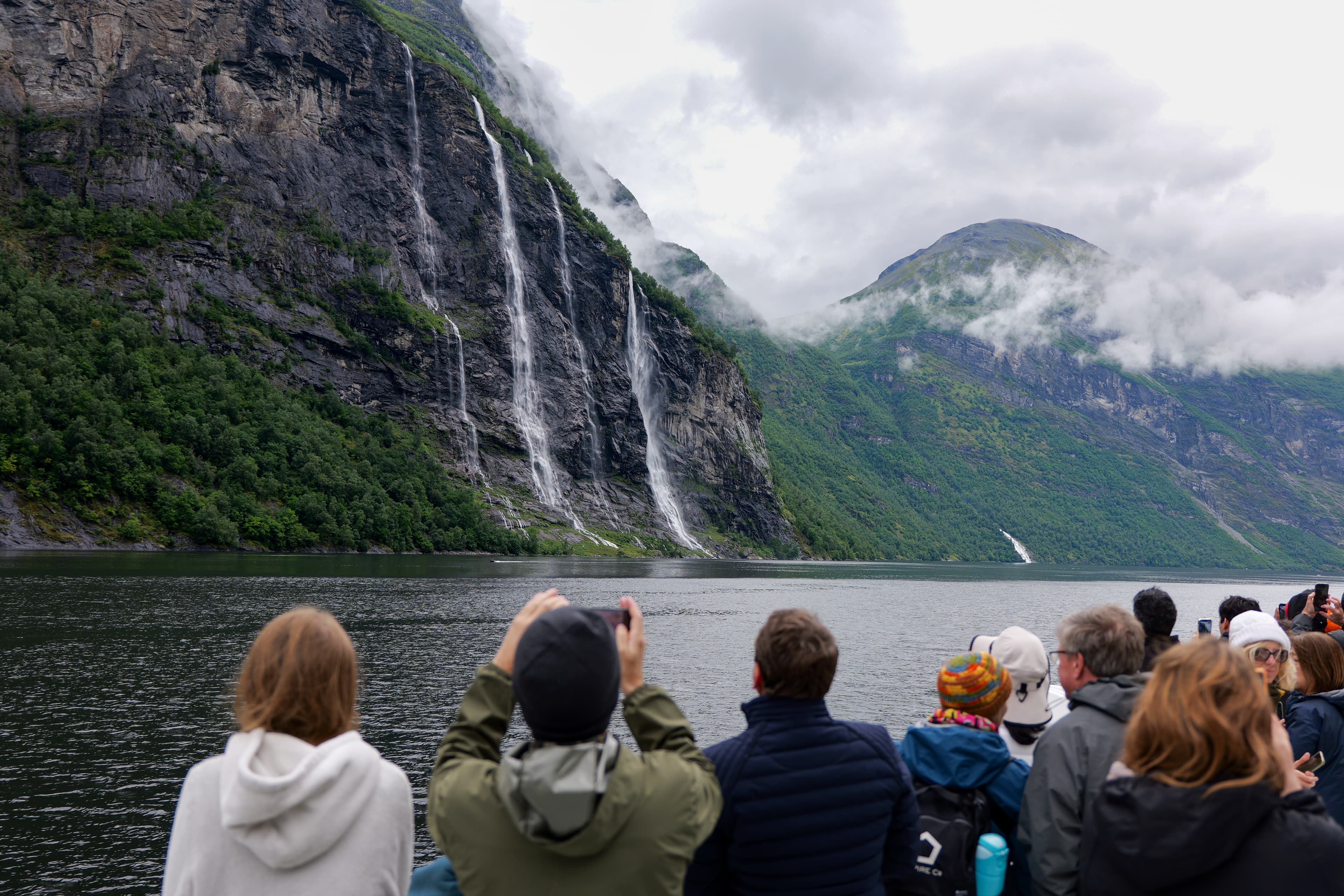
As mountain snow melts, waterfalls become more powerful. At Geirangerfjord in western Norway, this is a great time to see the Seven Sisters waterfall. We also recommend Hardangerfjord in May, when waterfalls such as Steindalsfossen and Vøringsfossen are often at their strongest, and the region's fruit orchards begin to bloom.
Our tip: If you'd like to see the fruit trees in bloom around Hardangerfjord, try visiting in mid-May. A warm spring can bring the blossoms earlier, while a colder spring can delay them into June.
Best for: Waterfalls, fruit blossom, green valleys, and visiting before peak summer.
Keep in mind: Snow can remain high in the mountains after spring reaches the villages. Check that the mountain roads and hiking trails you want to use are open.

June: Long days and outdoor activities
June is one of our top recommendations for a first trip to the Norwegian fjords, especially if you want to hike, kayak, or do other outdoor activities.
Days are long, the landscape is green, and you can still see waterfalls. Many summer cruises and activities are running, although some hiking trails high in the mountains may still have snow early in June.
June is especially good if you want to combine several experiences on the same trip. For example, you can take a fjord cruise, ride a scenic railway, explore a fjord village, and still have daylight left for an evening hike.
For classic fjord scenery in western Norway, we recommend Geirangerfjord or the Sognefjord region, including Aurlandsfjord and Nærøyfjord.
Best for: First-time visitors, waterfalls, long days, fjord cruises, and active trips.
Keep in mind: Hiking trails high in the mountains may still have snow, especially early in June. Check conditions for your chosen walk.
July: Peak season for fjord cruises and activities
July is high season around many of Norway’s western fjords. The long summer days and generally milder weather make it a popular time for fjord cruises, kayaking, hiking, and exploring viewpoints above the water.
If your travel dates are fixed, we recommend booking accommodation, fjord cruises, and popular activities well in advance, so you can travel on your preferred dates.
Best for: The widest choice of activities, summer hiking, and fjord cruises.
Keep in mind: Popular cruises and accommodation can fill up early.
August: Fjord cruises and mountain hiking
Visiting the fjords in August is much like July. Many mountain roads that close in winter, like Trollstigen, a winding mountain road near Åndalsnes in western Norway, are normally open.
Early August can be very busy in the fjords, since most people travel during the northern hemisphere’s summer vacation. It usually slows down toward the end of the month.
August is a particularly good month to consider hiking in the mountains around the fjords. Many higher trails have had more time to lose their winter snow, although weather and trail conditions still need checking.
If you’d like to combine a fjord cruise with hiking, consider Geirangerfjord and its surrounding mountains in western Norway. Another option is the Lysefjord near Stavanger, on Norway’s southwest coast, where you can hike to the Preikestolen viewpoint above the fjord.
Best for: Hiking, fjord cruises, kayaking, and summer scenery.
Keep in mind: Busy summer conditions can continue well into the month.

September: Autumn colors and quieter fjords
September is one of our favorite months for the fjords if you prefer fewer visitors. Many summer experiences are still available, and the western fjords of Geirangerfjord, Aurlandsfjord and Sognefjord get early autumn scenery.
The trees along the fjords begin to change color, and evenings cool as the days gradually shorten. You can see the first autumn colors appearing on the mountainsides, often with a mix of green, brown, orange, and yellow.
You can still join most fjord cruises and outdoor activities, but some seasonal activities, like kayaking, may become less available as the month ends and cooler weather comes.
In Northern Norway, daylight hours quickly shorten, which is also the start of the northern lights season.
Best for: Fewer visitors, early autumn colors, photography, and seasonal fjord experiences.
Keep in mind: Some seasonal activities end before the month is over.
October: Autumn scenery and fewer visitors
October in the fjords will have less daylight, cooler weather, and stronger autumn colors in many fjord regions.
Early in the month, the mountainsides around fjords like Hardangerfjord and Sognefjord can still show autumn colors. However, wind and rain can cause the leaves to fall quickly, so the timing varies from year to year.
Some seasonal cruises and guided activities finish in autumn, and snow can affect mountain roads. Our Norway in a Nutshell® tour combines a year-round cruise on the Nærøyfjord in western Norway with scenic train journeys. We plan your transport and connections, so you can explore independently with an itinerary arranged for you
We recommend October if you prefer quieter fjords and autumn scenery over the widest choice of outdoor activities. Some fjord cruises continue operating, especially on routes with year-round services, like in Nærøyfjord.
Early to mid-October is also a good time to visit Hardangerfjord, where the apple harvest is in full swing, and you can experience the region's cider-making traditions.
Best for: Autumn colors and quieter fjord destinations.
Keep in mind: Mountain routes may close as winter conditions arrive.
November: Quiet fjords and early winter scenery
November is one of the quietest months around the Norwegian fjords. Autumn gives way to winter; days are short, and snow becomes increasingly common on the surrounding mountains, although it can also reach lower elevations, like valleys or fjord villages.
Many seasonal activities have finished for the year, so choosing a fjord with reliable year-round transport and sightseeing options becomes especially important.
For a November trip, our Norway in a Nutshell® tour combines scenic railway journeys with a cruise on the Nærøyfjord in western Norway. You can also add a visit to Stegastein, a viewpoint above the nearby Aurlandsfjord. We plan all the included connections for you.
Best for: Few visitors, early winter scenery, and a quieter pace.
Keep in mind: Check which cruises and activities run on your travel dates before choosing where to stay.
December: Winter fjord cruises and snowy mountains
December brings winter scenery to the fjords, with short, dark days. Snow often covers the surrounding mountains, though conditions down by the fjord vary with the weather and location.
Selected fjord cruises and winter tours continue to operate. Around Geirangerfjord, for example, you can still experience the fjord landscape from the water, with snow on the surrounding mountains when conditions allow.
In northern Norway, December brings some of the longest nights of the year. You can explore fjords around the city of Tromsø or the Lofoten Islands and join excursions to look for the northern lights.
We recommend December if you’d like a winter fjord experience rather than the full range of summer activities.
Best for: Snow-covered mountains, winter fjord cruises, quiet destinations, and northern lights in Northern Norway.
Keep in mind: Plan sightseeing around the daylight hours and check departure times. Our winter tours have itineraries planned around the available daylight.
What is the best time to visit the fjords for…?
The best month depends on what you’d most like to experience. Here are our recommendations for some of the most popular fjord activities.
Explore the Norwegian fjords
From powerful spring waterfalls to snow-covered mountains in winter, you can experience the fjords in different ways throughout the year.
Choose a sightseeing cruise to see the mountains and waterfalls from the water. Our self-guided tours combine train journeys and fjord cruises, with transport and connections planned for you. You travel independently, following the itinerary we arrange
Discover Norway's famous fjords
From the narrow Nærøyfjord to the waterfalls of Geirangerfjord, every fjord has something different to offer. Explore our fjord guides for highlights, local tips, and inspiration for your next trip.

The Geirangerfjord
The Geirangerfjord is one of Norway's most visited tourist sites and has been included on the UNESCO World Heritage List, along with the Nærøyfjord, since 2005.

The Nærøyfjord
Surrounded by towering mountains up to 1,700 metres high, this arm of the Sognefjord is amazingly beautiful.

The Sognefjord
Norway’s longest fjord, the Sognefjord, is located in the heart of Norwegian fjord country and extends more than 200 km (120 miles) inland.

The Aurlandsfjord
Aurlandsfjord is a 29 km long branch of Sognefjord in western Norway, with the village of Flåm at its inner end. The fjord is wider than its narrow neighbor, the UNESCO-listed Nærøyfjord.
From Flåm, you can ride the famous Flåm Railway through the valley into the mountains. Around Aurlandsfjord, visit Stegastein viewpoint 650 meters above the water, or explore Aurland, the village where the classic penny loafer has its roots.
See the fjord from the water on a cruise, enjoy the view from Stegastein, or spend more time exploring the small villages along its shores.

The Hardangerfjord
If the Sognefjord is the King of the fjords of Western Norway, the Hardangerfjord is the Queen.

The Lysefjord
The Lysefjord is the southernmost of the biggest fjords in Norway. The 40-kilometre-long fjord is flanked by steep mountains, some more than 1,000 meters.
The Geirangerfjord
The Geirangerfjord is one of Norway's most visited tourist sites and has been included on the UNESCO World Heritage List, along with the Nærøyfjord, since 2005.
The Nærøyfjord
Surrounded by towering mountains up to 1,700 metres high, this arm of the Sognefjord is amazingly beautiful.
The Sognefjord
Norway’s longest fjord, the Sognefjord, is located in the heart of Norwegian fjord country and extends more than 200 km (120 miles) inland.
The Aurlandsfjord
Aurlandsfjord is a 29 km long branch of Sognefjord in western Norway, with the village of Flåm at its inner end. The fjord is wider than its narrow neighbor, the UNESCO-listed Nærøyfjord.
From Flåm, you can ride the famous Flåm Railway through the valley into the mountains. Around Aurlandsfjord, visit Stegastein viewpoint 650 meters above the water, or explore Aurland, the village where the classic penny loafer has its roots.
See the fjord from the water on a cruise, enjoy the view from Stegastein, or spend more time exploring the small villages along its shores.
The Hardangerfjord
If the Sognefjord is the King of the fjords of Western Norway, the Hardangerfjord is the Queen.
The Lysefjord
The Lysefjord is the southernmost of the biggest fjords in Norway. The 40-kilometre-long fjord is flanked by steep mountains, some more than 1,000 meters.