The Nærøyfjord
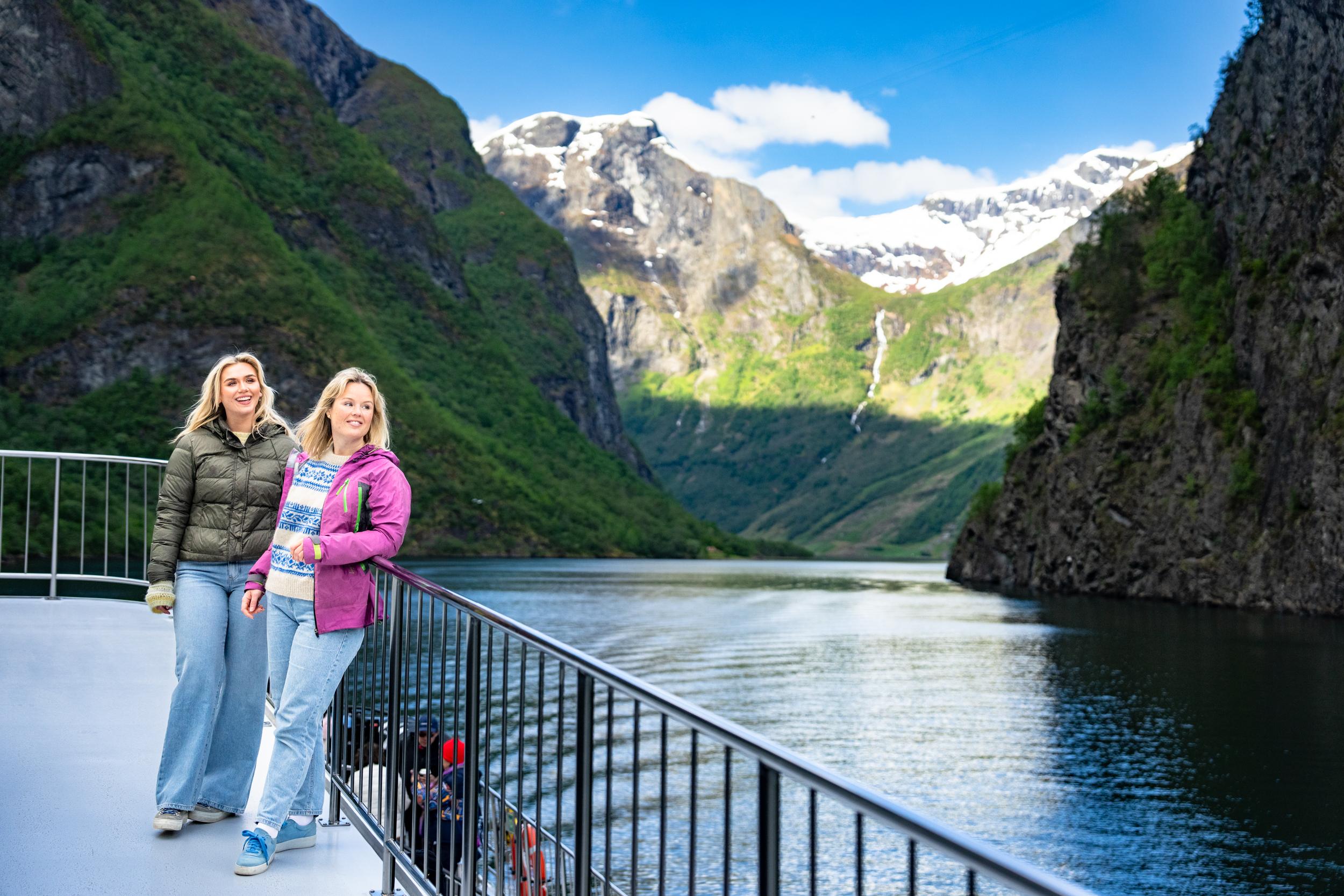
At its narrowest point, Nærøyfjord is just 250 m wide, with mountains rising up to around 1500 m above the water. Together with Geirangerfjord, it's part of the UNESCO-listed West Norwegian Fjords.
Nærøyfjord is a branch of Aurlandsfjord, which connects to the larger Sognefjord. We recommend taking a fjord cruise between Flåm and Gudvangen to experience Nærøyfjord. Along the way, you'll travel through both fjords, past waterfalls, small villages, and historic farms along the mountainsides.
Here's what to look out for on the cruise, when to visit, and how to include Nærøyfjord in a longer trip through Norway.
Written by
The Fjord Tours team
5 min readUpdated: Nov 9, 2026

Scroll to:
Quick facts
Nærøyfjord at a glance
- Location: Western Norway, in the Sognefjord region
- Fjord length: Around 17 km
- Narrowest point: 250 m
- Known for: Narrow fjord passages, steep mountainsides, and UNESCO World Heritage status
- UNESCO status: Part of the West Norwegian Fjords World Heritage Site since 2005
- How to experience it: Fjord cruises, kayaking, hiking
- Nearby destinations: Gudvangen, Flåm, and Undredal

The Nærøyfjord cruise
A fjord cruise is one of the best ways to experience Nærøyfjord. Much of the shoreline has no road, so traveling by boat gives you views of waterfalls and historic farms that are difficult to see from land.
The cruise between Flåm and Gudvangen takes around 2 hours and travels through both Aurlandsfjord and Nærøyfjord. You can experience it as part of Norway in a Nutshell®, which combines the fjord cruise with the Flåm Railway and other scenic journeys.
In the narrowest parts of Nærøyfjord, the mountainsides rise close to the water on both sides of the boat. If you spot kayakers on the fjord, their size against the mountains gives you a sense of the fjord’s scale.
What to see on the Nærøyfjord cruise

Kjelfossen waterfall
In Gudvangen, look out for Kjelfossen waterfall, one of Norway's tallest. Water flows down the mountainside in several stages rather than 1 single drop. The waterfall is usually strongest in spring and early summer, when snow melts in the mountains.
Historic farms
Along Nærøyfjord, you'll see old farms and small settlements. Before modern roads, people living here relied on boats to travel between villages. Some farms are now abandoned, leaving a glimpse into what life along the fjord was once like.

Undredal village and stave church
On the Aurlandsfjord section of the cruise, you'll pass Undredal. This village is known for its traditional brown goat cheese and a small wooden stave church, which is still in use today, with only 40 seats. It’s believed to be one of Scandinavia's smallest churches.

Bakka Church
As you cruise through Nærøyfjord, look out for Bakka Church, a small white wooden church near the shoreline. Built in 1859, it served families living along the fjord who previously had to travel by boat to attend church in Undredal.
Gudvangen and Viking Valley
Gudvangen village lies at the inner end of Nærøyfjord. It's home to Viking Valley (Njardarheimr), where you can learn about everyday life during the Viking Age through reconstructed buildings and guided activities.

The history of Nærøyfjord
The Royal Postal Road
Before modern roads, the fjord was part of an important postal route between Bergen and Oslo. Mail normally traveled by boat, but when ice made parts of Nærøyfjord difficult to cross, local farmers carried it along the path between Styvi and Bleiklindi.
Today, you can walk this preserved section of the Royal Postal Road. The trail is around 5.2 km one way and follows the shoreline past old stone walls and historic farmland.
Bakka Church
Before Bakka Church was built, families living along Nærøyfjord belonged to the parish of Undredal. Attending church meant traveling by boat, which could be difficult in bad weather. Built in 1859, Bakka Church gave local families a place of worship closer to home.
The origin of the name Nærøyfjord
The name Nærøyfjord is believed to link to Njord, the Norse god of the sea and seafaring.

How to get to Nærøyfjord
Nærøyfjord is in western Norway, near Flåm and Gudvangen. You can include the fjord in a longer journey between Oslo and Bergen, with scenic train rides and a fjord cruise. Our Norway in a Nutshell® tour combines these experiences in 1 booking, with the included tickets and connections planned for you.
From Oslo to Nærøyfjord
From Oslo, we recommend visiting Nærøyfjord as part of a longer journey through the mountains to western Norway. The Norway in a Nutshell® tour combines the Bergen Railway, Flåm Railway, and a fjord cruise through the UNESCO-listed Nærøyfjord. You can travel between Oslo and Bergen in 1 day, but we recommend adding an overnight stay in Flåm if you'd like more time to explore the area.
From Bergen to Nærøyfjord
Bergen is a convenient starting point for a day trip to Nærøyfjord. Norway in a Nutshell® combines scenic train journeys with a cruise through Nærøyfjord and Aurlandsfjord. You can complete the Bergen round trip in 1 day or add an overnight stay in Flåm to explore more of the surrounding fjords and mountains.
From Flåm or Gudvangen to Nærøyfjord
If you're staying in Flåm or Gudvangen, you can take a fjord cruise between the 2 villages to experience Nærøyfjord. The boat journey takes around 2 hours and passes through both Aurlandsfjord and Nærøyfjord.
You can also reach both villages by road.

When is the best time to visit Nærøyfjord?
You can visit Nærøyfjord year-round, with fjord cruises running in every season. We recommend May to September if you want to combine a cruise with hiking, kayaking, or other outdoor activities.
In May and June, melting snow feeds waterfalls along the mountainsides. July and August bring milder weather and long daylight hours, but they're also the busiest months. September and October introduce autumn colors and generally fewer visitors than in summer.
Winter in Nærøyfjord is a different experience, with shorter days, snow on the surrounding mountains, and fewer visitors. Norway in a Nutshell® runs year-round so that you can combine a winter fjord cruise with the Flåm Railway.
For more seasonal advice, read our guide to the best time to visit the Norwegian fjords.
Nearby fjords and attractions
Explore more places to visit near Nærøyfjord.


Visit Nærøyfjord with Fjord Tours
Experience Nærøyfjord as part of Norway in a Nutshell®, combining a fjord cruise with the Flåm Railway and Bergen Railway. Travel between Oslo and Bergen or choose a round trip, with the option to add overnight stays along the way.
Frequently asked questions
Discover Norway's famous fjords
From the narrow Nærøyfjord to the waterfalls of Geirangerfjord, every fjord has something different to offer. Explore our fjord guides for highlights, local tips, and inspiration for your next trip.

The Geirangerfjord
Geirangerfjord is a 15 km-long fjord in western Norway, known for its steep mountains, waterfalls, and historic mountain farms where families once lived high above the water. Together with another fjord in western Norway, the Nærøyfjord, it’s part of the UNESCO World Heritage Site known as the West Norwegian Fjords, inscribed in 2005.
The Seven Sisters waterfall is one of the fjord’s most famous attractions. From viewpoints like Flydalsjuvet and Ørnesvingen, you can also see the fjord and surrounding mountains from above.
In this guide, we share our recommendations on what to see, how to get there, when to visit, and how to experience Geirangerfjord by boat or as part of a longer journey through Norway.

The Nærøyfjord
At its narrowest point, Nærøyfjord is just 250 m wide, with mountains rising up to around 1500 m above the water. Together with Geirangerfjord, it's part of the UNESCO-listed West Norwegian Fjords.
Nærøyfjord is a branch of Aurlandsfjord, which connects to the larger Sognefjord. We recommend taking a fjord cruise between Flåm and Gudvangen to experience Nærøyfjord. Along the way, you'll travel through both fjords, past waterfalls, small villages, and historic farms along the mountainsides.
Here's what to look out for on the cruise, when to visit, and how to include Nærøyfjord in a longer trip through Norway.

The Sognefjord
Norway’s longest fjord, the Sognefjord, is located in the heart of Norwegian fjord country and extends more than 200 km (120 miles) inland.

The Aurlandsfjord
Aurlandsfjord is a 29 km long branch of Sognefjord in western Norway, with the village of Flåm at its inner end. The fjord is wider than its narrow neighbor, the UNESCO-listed Nærøyfjord.
From Flåm, you can ride the famous Flåm Railway through the valley into the mountains. Around Aurlandsfjord, visit Stegastein viewpoint 650 meters above the water, or explore Aurland, the village where the classic penny loafer has its roots.
See the fjord from the water on a cruise, enjoy the view from Stegastein, or spend more time exploring the small villages along its shores.

The Hardangerfjord
If the Sognefjord is the King of the fjords of Western Norway, the Hardangerfjord is the Queen.

The Lysefjord
The Lysefjord is the southernmost of the biggest fjords in Norway. The 40-kilometre-long fjord is flanked by steep mountains, some more than 1,000 meters.
The Geirangerfjord
Geirangerfjord is a 15 km-long fjord in western Norway, known for its steep mountains, waterfalls, and historic mountain farms where families once lived high above the water. Together with another fjord in western Norway, the Nærøyfjord, it’s part of the UNESCO World Heritage Site known as the West Norwegian Fjords, inscribed in 2005.
The Seven Sisters waterfall is one of the fjord’s most famous attractions. From viewpoints like Flydalsjuvet and Ørnesvingen, you can also see the fjord and surrounding mountains from above.
In this guide, we share our recommendations on what to see, how to get there, when to visit, and how to experience Geirangerfjord by boat or as part of a longer journey through Norway.
The Nærøyfjord
At its narrowest point, Nærøyfjord is just 250 m wide, with mountains rising up to around 1500 m above the water. Together with Geirangerfjord, it's part of the UNESCO-listed West Norwegian Fjords.
Nærøyfjord is a branch of Aurlandsfjord, which connects to the larger Sognefjord. We recommend taking a fjord cruise between Flåm and Gudvangen to experience Nærøyfjord. Along the way, you'll travel through both fjords, past waterfalls, small villages, and historic farms along the mountainsides.
Here's what to look out for on the cruise, when to visit, and how to include Nærøyfjord in a longer trip through Norway.
The Sognefjord
Norway’s longest fjord, the Sognefjord, is located in the heart of Norwegian fjord country and extends more than 200 km (120 miles) inland.
The Aurlandsfjord
Aurlandsfjord is a 29 km long branch of Sognefjord in western Norway, with the village of Flåm at its inner end. The fjord is wider than its narrow neighbor, the UNESCO-listed Nærøyfjord.
From Flåm, you can ride the famous Flåm Railway through the valley into the mountains. Around Aurlandsfjord, visit Stegastein viewpoint 650 meters above the water, or explore Aurland, the village where the classic penny loafer has its roots.
See the fjord from the water on a cruise, enjoy the view from Stegastein, or spend more time exploring the small villages along its shores.
The Hardangerfjord
If the Sognefjord is the King of the fjords of Western Norway, the Hardangerfjord is the Queen.
The Lysefjord
The Lysefjord is the southernmost of the biggest fjords in Norway. The 40-kilometre-long fjord is flanked by steep mountains, some more than 1,000 meters.